
What is HBOT, really?
Hyperbaric oxygen therapy (HBOT), also referred to as barotherapy, is a therapeutic method in which a person breathes 100% oxygen under increased atmospheric pressure. Elevated pressure influences both oxygen uptake in the lungs and the efficiency with which oxygen is distributed throughout the body and into tissues.
Under normal conditions, oxygen is transported in the body primarily by hemoglobin in red blood cells. Hemoglobin binds oxygen in the lungs and delivers it to tissues based on the body’s needs, meaning that oxygen distribution depends largely on proper blood circulation and red blood cell function. This is a normal and efficient physiological process that works well in healthy tissues under typical conditions.
This mechanism, however, has natural limitations. At normal atmospheric pressure, hemoglobin is already nearly fully saturated with oxygen and cannot bind much more. When blood flow is reduced or when inflammation, swelling, or tissue damage is present, oxygen delivery to cells may be limited—even if overall blood oxygen levels seem normal.
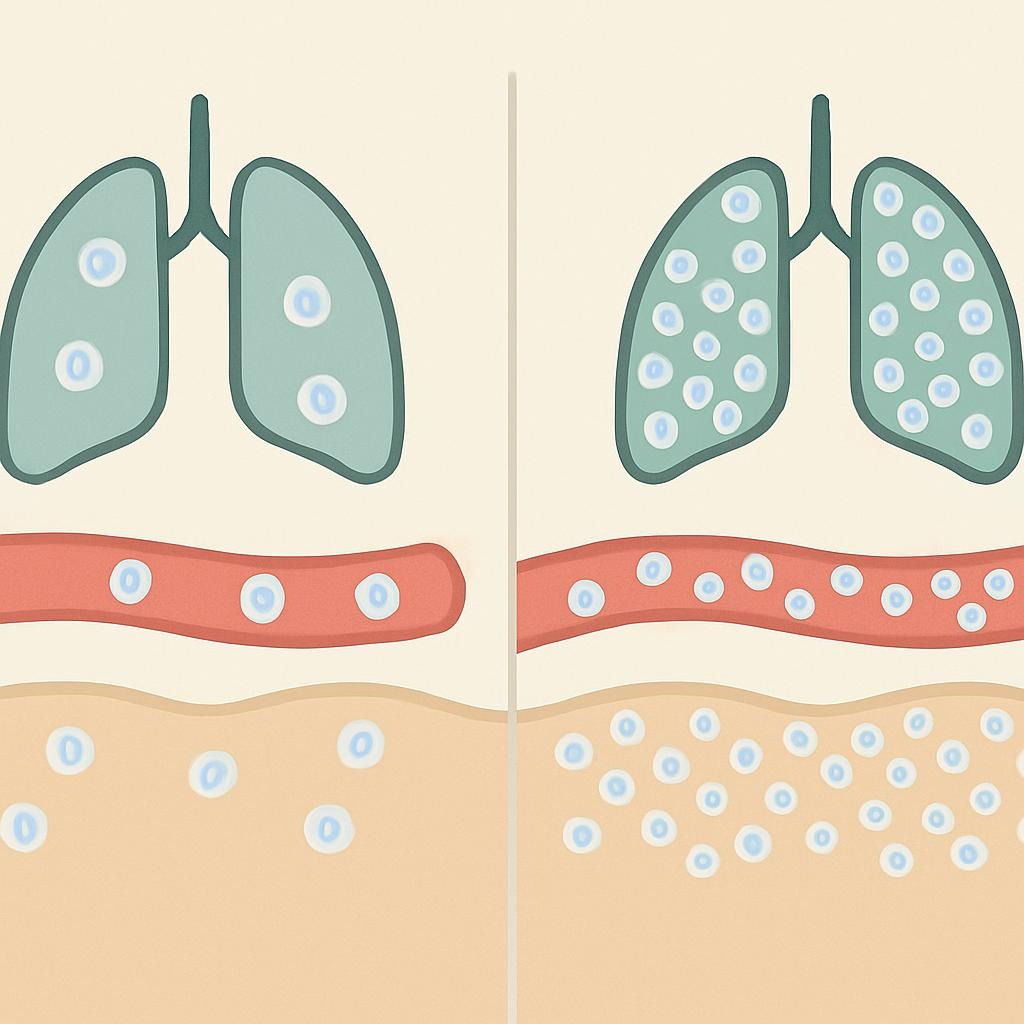
The unique effect of hyperbaric oxygen therapy lies in the fact that, under increased pressure, oxygen dissolves not only into hemoglobin but also directly into blood plasma. This pressure-driven process allows oxygen to circulate more efficiently and reach areas where red blood cells may have limited access, improving oxygen delivery to cells, tissues, and organs.
The distinctive feature of hyperbaric oxygen therapy is that under increased pressure, oxygen dissolves not only in hemoglobin but also directly in the blood plasma. This pressure allows oxygen to be delivered more efficiently into the bloodstream and to reach tissues that red blood cells cannot always access. As a result, oxygen supply to cells, tissues, and organs is improved.
Benefits of Oxygen Therapy for Healthy Individuals
When oxygen levels in the body temporarily rise above normal—such as during oxygen therapy—cells gain additional “functional reserve.” This can support energy production, tissue recovery, nervous system balance, and both physical and mental recovery, even in individuals without an actual oxygen deficiency. For this reason, oxygen therapy is also used by athletes, professionals engaged in mental work, and people who wish to support overall recovery capacity and resilience.
A simple comparison helps illustrate this effect: oxygen for cells is like fertilizer for plants. A plant can grow without additional fertilizer, but under favorable conditions—with sufficient nutrients and water—growth becomes stronger, recovery faster, and resistance to stress higher. In a similar way, even healthy cells may function more efficiently when oxygen availability is temporarily higher than the minimum required.
When the Body Is Oxygen-Deprived
There are situations where oxygen deficiency is not only indirect or tissue-related, but can be objectively measured. When tests show lower-than-normal oxygen levels in the blood, this can affect the entire body—from energy levels and muscle performance to concentration and recovery. Low oxygen availability means that cells lack sufficient resources for normal metabolism, which can slow down recovery processes and contribute to persistent fatigue.
In such cases, hyperbaric oxygen therapy (HBOT) may provide additional support by increasing oxygen availability in the body and helping deliver oxygen to tissues where supply has been limited.
What Does an Oxygen Therapy Session Look Like?
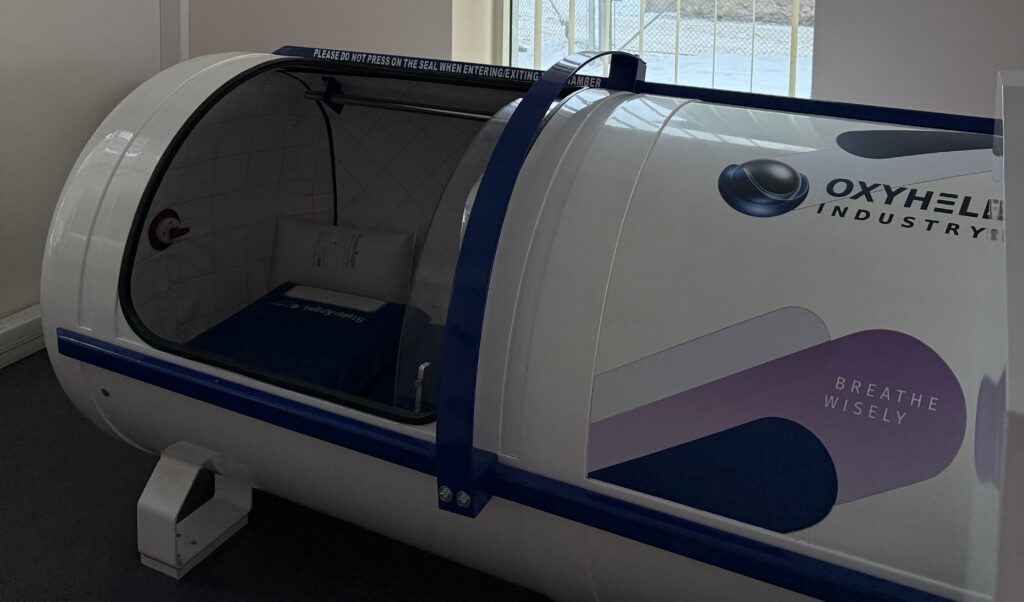
Entering the oxygen chamber is a simple and calm process. An oxygen therapy session typically lasts about 60 minutes, although the first visit may be slightly shorter, as it includes a consultation and completion of a client questionnaire. During the session, the person breathes oxygen through either a mask or a nasal cannula, depending on personal preference. You may bring a book, laptop, or phone into the chamber, and many people use the time to read, work, or simply rest—sleeping is also possible if desired. Comfortable everyday clothing is suitable for the session.
As the chamber pressure increases, a mild sensation of pressure may be felt in the ears, similar to what is experienced during airplane takeoff or landing. This usually resolves with swallowing, yawning, or gentle jaw movement.
A Brief History: How Oxygen Became a Therapy
Hyperbaric oxygen therapy is not a new trend—its roots go back centuries, long before modern medical oxygen was scientifically defined. The first experiments to influence the body through air pressure and air quality took place as early as the mid-1600s, when British physician Nathaniel Henshaw built an airtight room (“domicilium”) to study the effects of pressure and air on health.
In 1834, the first hyperbaric chamber was completed and used for various health conditions, and a few years later, larger chambers were created to treat multiple patients at once. From the 1960s and 1970s onward, the use of HBOT has grown, accompanied by increasing scientific research.
Today, oxygen therapy is no longer associated solely with decompression sickness or rare emergency situations. It is increasingly used as part of recovery and wellness-focused approaches, where the goal is not to treat disease but to support the body’s natural recovery processes and enhance immune function.
HBOT is now available not only in hospitals but also to the wider public. In Estonia, hyperbaric therapy is part of the intensive care services at the North Estonia Medical Centre (Regionaalhaigla), where it is applied according to medical indications. In Tallinn, Hapnikuteraapia Keskus is the only center offering hyperbaric therapy in a rigid-chamber setup, located at Sügise 5.
Who may benefit from HBOT?
Oxygen therapy is used in both research and clinical practice for a wide range of conditions, where the common factors are reduced tissue oxygenation, inflammatory processes, or delayed recovery. Oxygen therapy serves as a supportive part of a comprehensive approach for recovery, prevention, and management of chronic conditions.
Hyperbaric therapy has been studied and applied to support, among others, the following conditions:
- Chronic fatigue and low energy – including after viral infections, chronic stress, or during recovery phases where cellular energy metabolism may be impaired.
- Post-influenza and post-COVID-19 complications – persistent shortness of breath, brain fog, muscle weakness, and slow recovery. Hyperbaric therapy can support tissue oxygenation and neurological recovery.
- Autoimmune and chronic inflammatory conditions – as a supportive approach, since oxygen may reduce inflammation and promote tissue repair.
- Gut inflammation and digestive disorders – in cases where blood flow and oxygen supply to the intestinal wall are impaired and recovery capacity is reduced.
- Chronic and slow-healing wounds – including ulcers and post-surgical wounds, where oxygen plays a critical role in tissue regeneration.
- Recovery after cosmetic or other surgical procedures – to support reduced swelling, inflammation, and tissue healing, aiming to accelerate recovery and minimize complication risks.
- Sports recovery and overtraining – to support muscle, connective tissue, and nervous system recovery, particularly after intense training or minor injuries.
- Sleep apnea and other sleep disorders – especially when repeated nighttime oxygen deficiency leads to daytime fatigue, poor concentration, or brain fog. Research focuses on brain oxygenation and autonomic nervous system balance.
- Fertility and IVF support – HBOT has been studied in reproductive medicine, focusing on egg quality, embryo development, and tissue oxygenation. Research is still in early stages but shows promising preliminary results.
- Cellular aging and telomeres – recent studies examine the effect of hyperbaric oxygen therapy on biological aging, including telomere length and the proportion of senescent cells.
- Nervous system recovery and neuroplasticity – supporting cerebral blood flow, cognitive function, and recovery capacity. Investigated in both post-traumatic conditions and aging.
- General wellness and preventive support – for individuals aiming to enhance resilience, recovery capacity, and stress tolerance even without a specific medical diagnosis.
- Biohacking and conscious prevention – increasingly used to support cellular energy metabolism, recovery, and adaptability to modern lifestyle demands.
For these reasons, oxygen therapy is increasingly viewed as part of recovery and wellness-focused approaches, offering the body a way to better cope with daily demands and support its natural recovery processes.
HBOT in Tallinn – what you should know before your session
Hapnikuteraapia Keskus is located at Sügise 5, Tallinn, near Toompuiestee and Ginger Cafe. The center is easily accessible by both public transport and private car, making it convenient for visitors from across the city.
There is parking available in front of the building on the street within the city center parking zone, or behind the building in the EP 203 parking zone.
Session duration and clothing: A hyperbaric oxygen therapy session lasts approximately 60 minutes. It is recommended to wear comfortable clothing that does not constrict the body or restrict movement.
It is also advisable to avoid consuming coffee or other strongly stimulating beverages immediately before the session, as caffeine can raise blood pressure and make it harder to relax in the chamber. A full list of contraindications for oxygen therapy can be found on our website.
We understand that taking the time to read a longer, in-depth article is not something to be taken for granted today. We hope this article has provided a clearer overview of how hyperbaric oxygen therapy (HBOT) works and when it may support your body’s recovery and overall wellness.
If you feel that oxygen therapy could be a beneficial support for you, you are welcome to visit our Hyperbaric Oxygen Therapy Center in Tallinn.
Leave a Reply